

 English
 русский
 Français
 Español
-
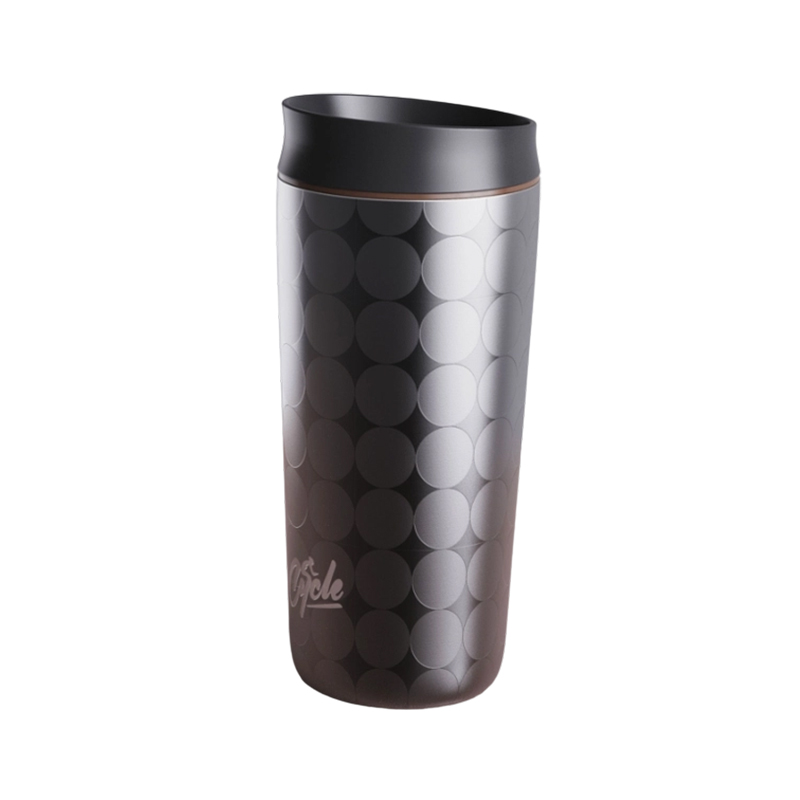 Switchable Dual-Function Lid Coffee Mug
-
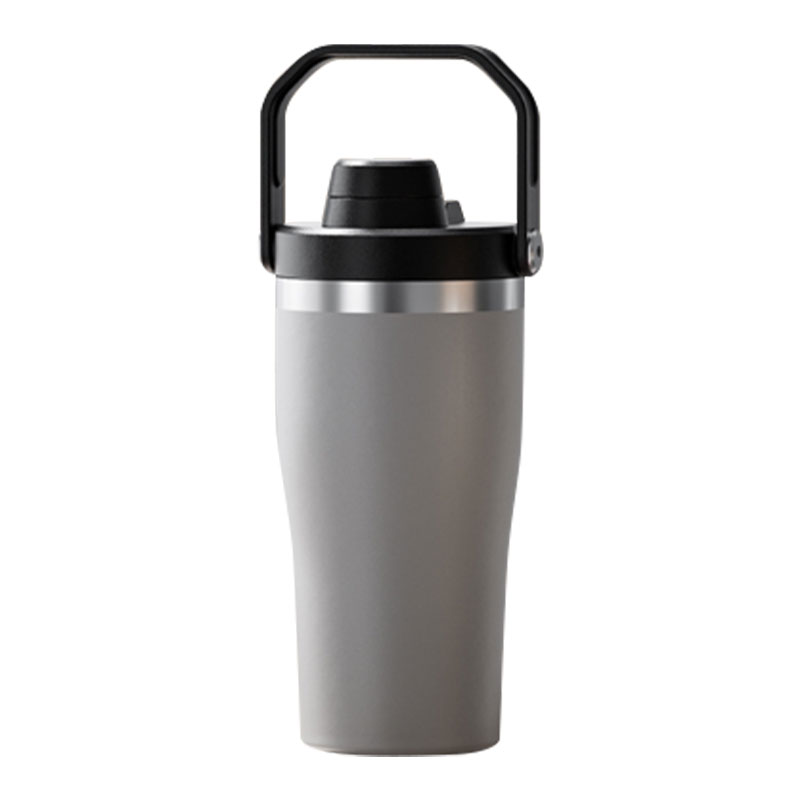 Portable Stainless Steel Mini Ice Bucket
-
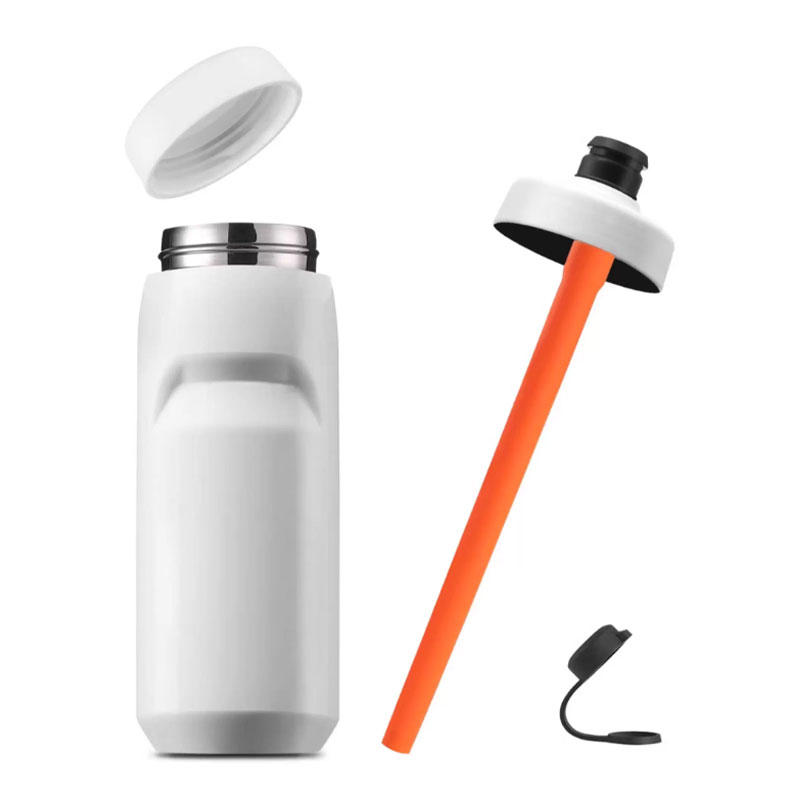 Concave-Designed Sports Water Bottle
-
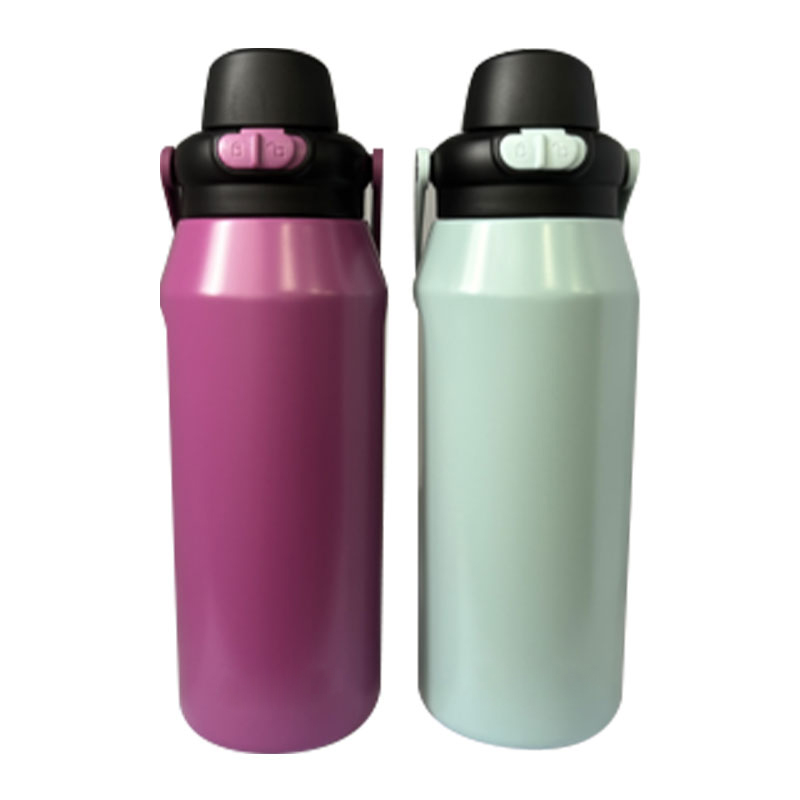 Wide-Mouth Flip Lid Sports Bottle
-
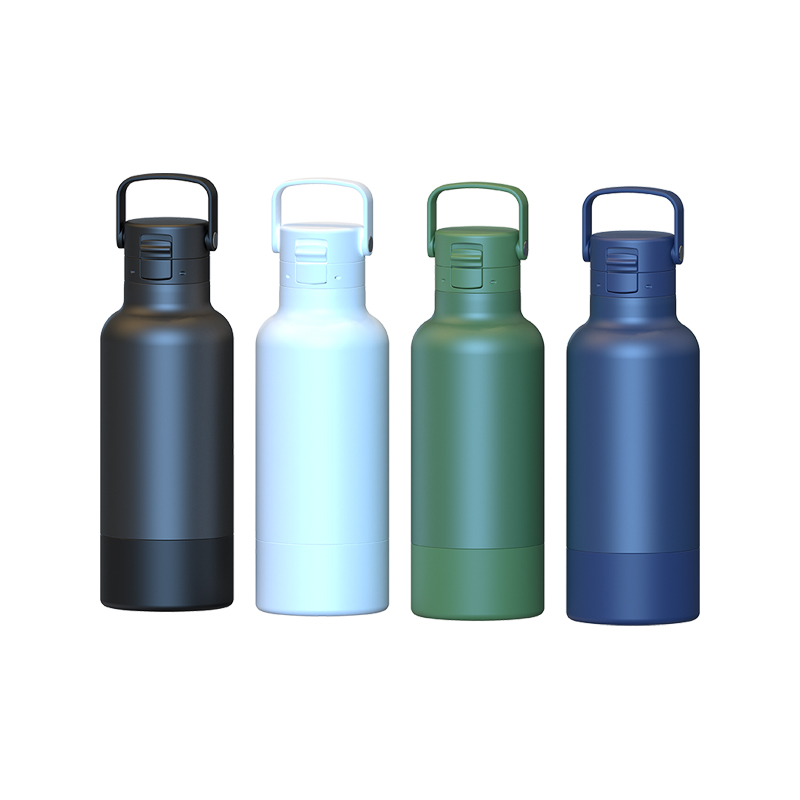 750ml Stainless Steel Flask Foldable Handle Portable Camping Sports Water Bottle
-
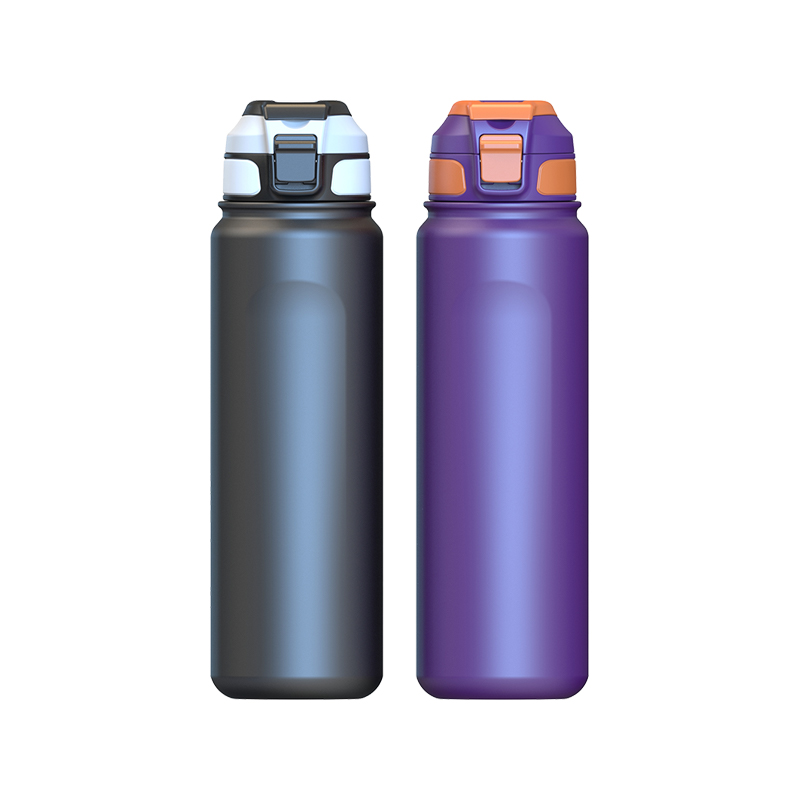 700ml Stainless Steel Sports Fitness Insulated Water Bottle With Portable Drink Lid Multifunctional Straw Thermos Cup
-
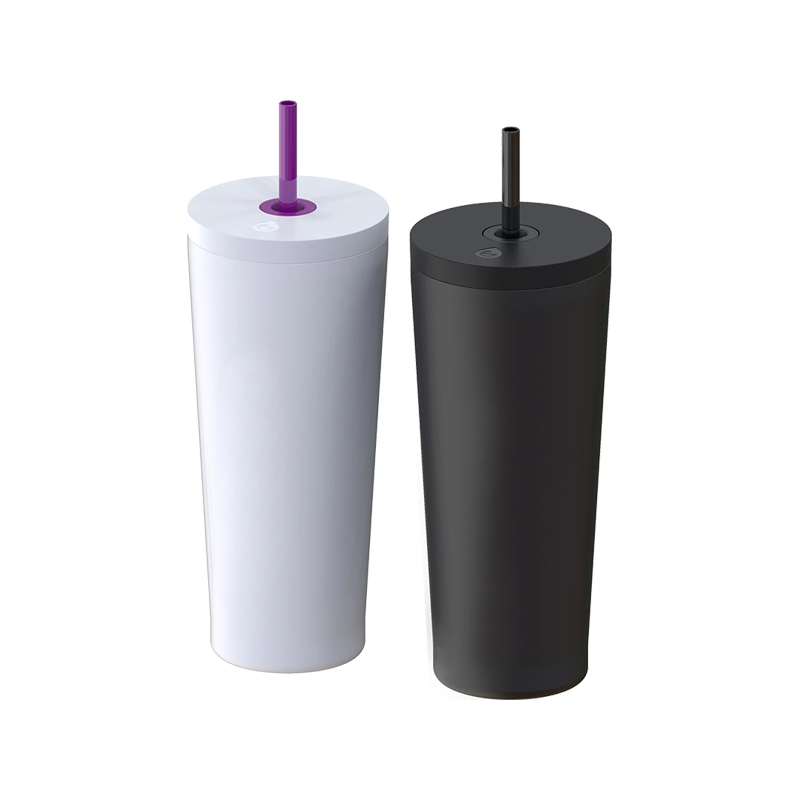 24oz Double Layer 304 Stainless Steel Travel Vacuum Insulated Tumbler 700ml Drink Straw Cup With Internal Screw Cover
-
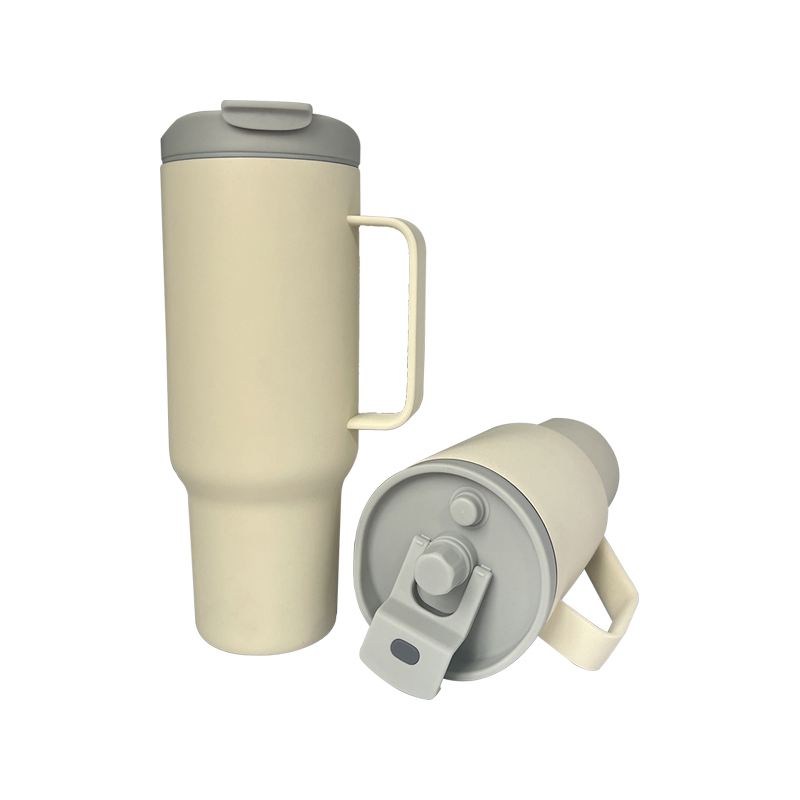 40oz 1200ml Double Wall Stainless Steel Travel Vacuum Insulated Tumbler with Double Magnetic Attraction Lid
Can Insulated Water Bottle with Flip Straw Prevent Leaks?
People usually judge a bottle within the first few seconds. They flip the lid open, test the straw, shake it slightly, then decide whether it feels “solid” or cheap.
Inside drinkware factories, that first impression is actually very difficult to control consistently.
A normal vacuum bottle mainly depends on insulation structure. An insulated water bottle with flip straw has more moving parts, more sealing points, and more mechanical stress concentrated around the lid area.
That changes the entire production logic.
The bottle body itself is often not the complicated part anymore.
Flip Mechanisms Wear Faster Than Stainless Steel
Most stainless steel vacuum bodies can remain structurally stable for years. The first aging signs on an insulated water bottle with flip straw usually appear around the lid mechanism instead.
Repeated opening changes the hinge pressure gradually.
At first, the flip cover closes tightly with a crisp locking feel. After long-term use, the spring force weakens slightly, hinge movement becomes looser, and the lid alignment starts shifting by very small amounts.
Users may not notice immediately, but factories pay attention to these details early during durability testing because even tiny lid deviations affect sealing performance later.
Especially in commuter bottles, the lid experiences far more movement than the bottle body itself.
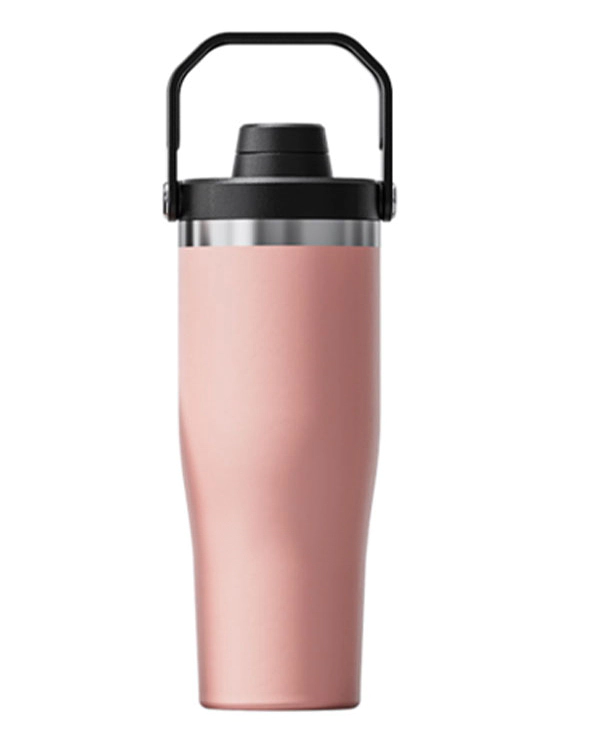
The Leak Problem Often Starts Around Airflow
One interesting thing about an insulated water bottle with flip straw is that it cannot be completely sealed the same way as a traditional screw-cap flask.
The straw system needs airflow balance to allow smooth drinking. Once air enters the design, leak control becomes much more sensitive.
This is why some bottles leak only under certain conditions:
after shaking inside bags
during altitude changes
when filled with hot drinks
after repeated lid opening
when stored horizontally
Pressure behavior changes constantly inside straw bottles.
Good sealing depends on how well the airflow pathway and silicone valves work together rather than on gasket thickness alone.
Hot Drinks Change The Entire Lid Behavior
A lot of flip straw bottles are designed mainly around cold beverages. Once users pour hot liquids into an insulated water bottle with flip straw, the internal pressure conditions become completely different.
Steam gradually pushes against the lid from inside.
If the venting structure is too restrictive, pressure buildup affects the straw seal directly. If venting is too loose, heat retention drops quickly.
Balancing those two conditions is harder than many people think.
This is one reason some factories separate cold-drink straw systems from high-temperature bottle designs entirely instead of using one universal lid structure.
The lid engineering becomes much more difficult once heat enters the equation.
Bottle Weight Quietly Changes User Preference
Inside product development discussions, weight matters more than appearance surprisingly often.
A heavy insulated water bottle with flip straw may feel premium initially, but daily carrying changes how people judge the product after several weeks. Office users, students, and commuters usually interact with portability differently from outdoor users.
That is why many manufacturers reduce unnecessary thickness around non-structural areas while keeping reinforcement near the lid threads and hinge sections.
The bottle should feel stable without becoming tiring to carry repeatedly.
Actually, many successful drinkware products are designed more around long-term handling comfort than around maximum insulation numbers alone.
Surface Finishing Affects Grip More Than Looks
The exterior coating on an insulated water bottle with flip straw is not purely decorative.
Smooth glossy finishes show scratches quickly after being placed into bags or cup holders repeatedly. Matte powder coatings hide wear better, but coating thickness changes the tactile feeling during grip.
Factories often test surface treatments under abrasion conditions because bottles experience constant friction against keys, zippers, desktops, and backpack interiors.
Over time, lower-quality coatings usually fail first around:
- bottom edges
- lid contact points
- carrying handle areas
- cup holder pressure zones
- hinge corners
That wear pattern is very predictable in real-world use.
Straw Cleaning Usually Decides Long-Term Experience
Most users do not stop using a bottle because the insulation fails.
They stop using it because the straw system becomes annoying to clean.
An insulated water bottle with flip straw naturally traps more moisture than standard drinkware because liquid remains inside narrow channels after drinking. Sweet beverages make this even worse.
Once residue builds up around the straw valve or hidden silicone parts, odor problems appear surprisingly quickly.
This is why removable straw structures became much more common recently. Factories realized that cleaning convenience affects user retention more directly than slight insulation differences.
People tolerate small temperature loss much more easily than unpleasant odor inside the drinking system.
The Lid Now Matters More Than The Bottle
Ten years ago, most insulated drinkware competition focused mainly on vacuum retention time.
Today, the lid often determines whether an insulated water bottle with flip straw feels high-end or disposable.
The bottle body itself has become relatively standardized across many factories. The real difference now comes from hinge stability, straw smoothness, leak resistance, and long-term opening feel.
Users interact with the lid constantly but only think about insulation occasionally.
That is why modern drinkware development increasingly focuses on movement, ergonomics, and sealing mechanics instead of only stainless steel construction.
A good bottle usually feels effortless during daily use.
The flip cover opens naturally, the straw drinks smoothly, and the bottle survives repeated carrying without constantly reminding the user to check for leaks.
-
Tel
+86-579-87252573
-
Fax
+86-579-87510911
-
Mobile
+86-15157970274
Follow
Factory Address
NO.3 Weier East Road, Hardware Industrial Zone, Tongqin Town, Wuyi County, Jinhua City, Zhejiang Province, China
If You Have Any Query
Send Message
Copyright © Zhejiang Linghong lndustry & Trade Co., Ltd. All Rights Reserved.

Stainless Steel Bottle Factory